Older Hempstead homes often keep their heat and hot water in the basement: an oil or gas boiler feeding radiators, and a tank water heater a few feet away. When either one leaks, the water starts at the lowest point in the house and spreads from there.
Key takeaways
- Many older Hempstead homes use an oil or gas boiler feeding radiators, plus a tank water heater in the basement.
- A boiler or heater leak releases hot water, so the first step is safety, not mopping.
- A water heater tank that leaks from the shell is replaced, not repaired, and the floor must be dried before the new unit goes in.
- Radiator and baseboard leaks can travel through floors, so water may show up one level below the source.
- Stored boxes and wall bottoms soak through quickly, which is why extraction comes before everything else.
Why the basement is where this happens
Much of Hempstead housing went up before 1960. Two family homes, Colonials, Capes and Tudors on full basements were built with the heating plant downstairs.
Plenty of those homes still run an oil or gas boiler that feeds radiators on every floor. The hot water for the taps usually comes from a tank water heater in the same basement.
Add downtown apartment buildings with their own boiler rooms, and there is a long list of places where a failed valve, a corroded tank or a cracked pipe can release a lot of water at once.
Boiler and radiator leaks
A boiler system is a closed loop of hot water or steam moving through pipes to radiators and baseboard units. When a fitting, valve or radiator gives way, the water in the loop comes out, and the boiler may try to refill the system on its own.
That means a small drip can turn into a steady supply for as long as the leak runs.
Where the water ends up
A boiler room leak onto bare concrete is the simpler case, because the floor is hard and the water stays put until it is extracted.
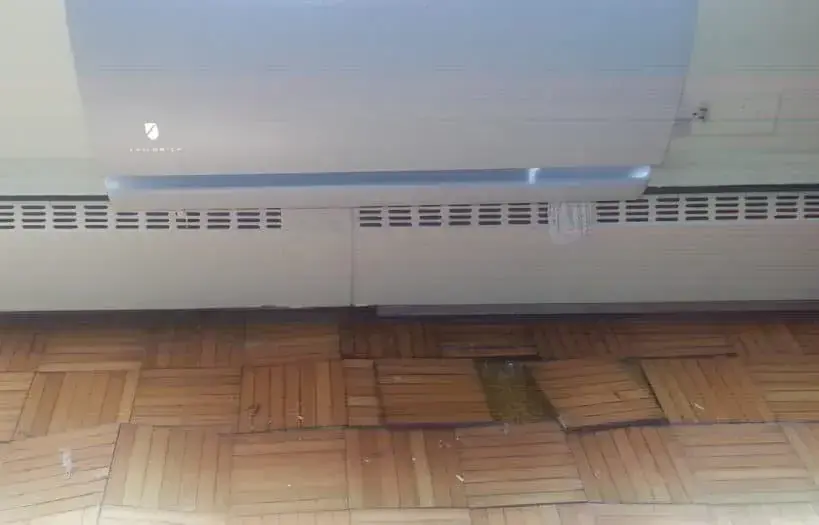
A radiator valve or baseboard leak upstairs is harder. It can soak a hardwood floor and then drip through the ceiling to the room below.
- Look for wet spots under radiators and around valves.
- Check ceilings below a radiator for stains or sagging paint.
- Note a falling pressure gauge on the boiler, which can mean the system is losing water.
- Listen for a boiler that keeps refilling or cycling more than usual.
Why hot water changes the response
Hot water can scald, and steam carries heat and moisture into wall cavities. The response starts with a safe shutoff of the boiler, not with pulling out towels.
Once the system is off and the water has cooled, extraction can begin without putting anyone at risk.
Tank water heater failures
A tank water heater holds a lot of water inside a metal shell that wears out over time. When the shell fails, it often fails all at once.
The water then moves outward across the basement floor and into anything stored nearby. It soaks the bottoms of walls, cardboard boxes and furniture legs.
A tank that leaks from the shell cannot be patched. It is replaced, so the leak is also the moment to plan a new unit and to dry the floor before that unit is set in place.
A tank in a basement closet sends water into wall framing, while a tank in an open basement spreads it across the slab. Both need extraction, and the closet case needs the wall bottoms opened and dried as well.
- Shut off the cold water supply to the tank.
- Turn off the electricity or the gas feeding the heater, if it can be reached safely.
- Keep stored items out of the puddle and lift anything absorbent onto a dry surface.
- Do not drain a tank full of hot water onto a floor where people will walk.
First steps for a homeowner
The first response is short and practical. It protects people first, then property.
None of these steps needs tools beyond what most households already own.
If the leak is slow, a bucket under the drip and a towel around the base buy time. If it is fast, shutting off the supply and calling for help matters more than any cleanup.
- Do not step into water near electrical equipment or the panel.
- Shut off the fuel or power to the boiler or heater only where it is safe to reach.
- Close the water supply to the leaking unit.
- Photograph the equipment, the water and anything damaged.
- Call the restoration team before wood trim, boxes and drywall draw the moisture upward.
How the cleanup runs
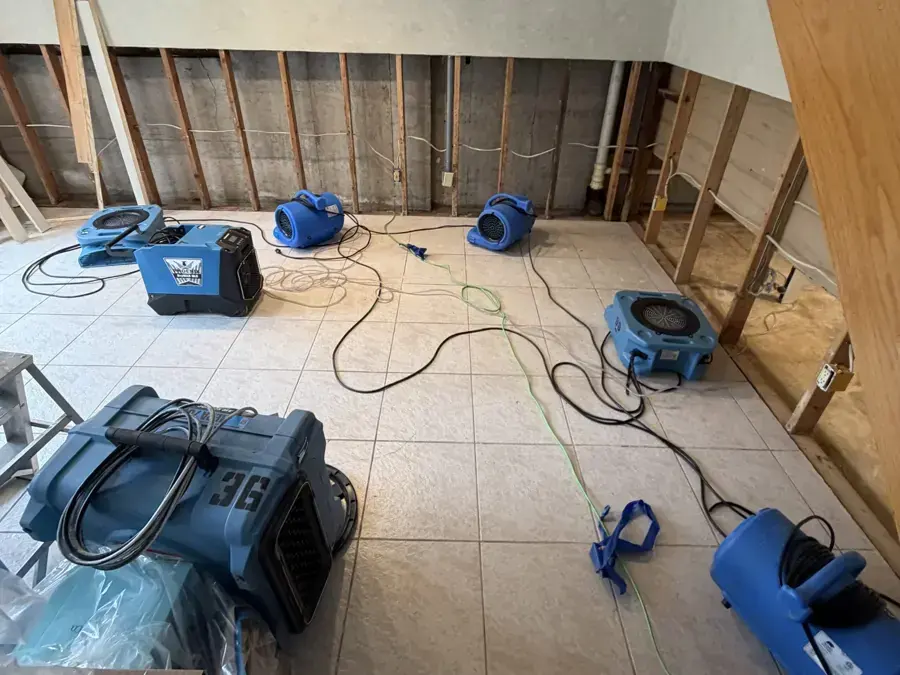
The extraction crew starts by removing standing water. Then comes the part people do not see: moisture in the slab, in wall bottoms and in subfloors.
The drying team maps the moisture with meters and decides what can be dried in place and what has to come out.
- Extract standing water and soaked contents.
- Open wall bottoms where readings show water behind the surface.
- Set air movers and dehumidifiers and take daily readings.
- For a radiator or baseboard leak, dry the floor system and the ceiling below.
- Release the equipment only when readings reach the dry standard.
Equipment that failed before can leak again
Older systems often have patched valves and aged tanks. A leak that was dried once can return if the part that caused it is not replaced.
That is a plumbing and heating matter, not a restoration one. The restoration team dries the damage, and a plumber or heating contractor handles the repair.
For a boiler or radiator loss, the boiler and radiator leak cleanup service covers the extraction and drying. For a failed tank, the water heater leak cleanup service does the same for the floor and walls.
What happens to the rest of the basement
A leak near the heating plant rarely stays near the heating plant. Water follows the floor slope toward a drain, a corner or a stack of boxes.
Stored contents are sorted into what can be dried and what cannot. Cardboard, paper records and soft goods usually do not survive a soaking.
If the water reached finished walls or a finished room, the structural drying stage checks the framing and subfloor too. Wood and plaster hold moisture longer than they seem to, and a wall that feels dry can still read wet on a meter.
Questions
Can a leaking water heater tank be repaired?
No. A tank that leaks from the shell has failed, and the unit is replaced. The floor should be dried before the new heater goes in.
Is boiler water dangerous?
It can be. Hot water scalds and steam travels into walls, so the system is shut down safely before cleanup begins.
How far can a radiator leak spread?
Through the floor and into the ceiling below. That is why a leak on an upper floor can show up as a stain a level down.
Does everything stored in the basement have to be moved out?
Items that sit on the floor or against wet walls should come up and out. The crew sorts contents into those that can be dried and those that cannot.
Does a leaking boiler or heater raise the chance of mold?
Wet materials left damp can start growing mold in 24 to 48 hours, so drying begins as soon as the water is out.