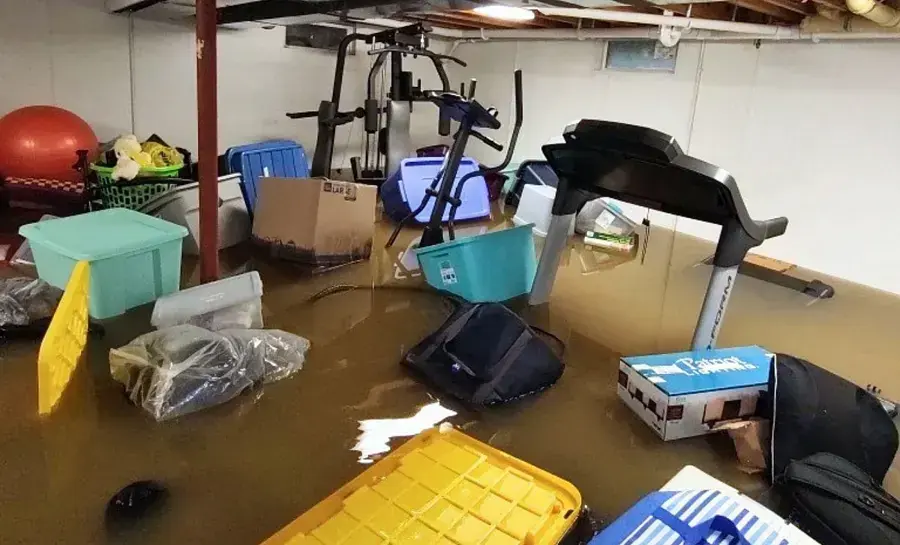
Malverne's own history explains a lot about its lower levels. The village says it rests on a bed of sand and gravel left by glaciers, and that its location gives it a higher water table than villages farther north.
Key takeaways
- The village says Malverne sits on sand and gravel, with a higher water table than villages farther north on Long Island.
- Early home builders pumped some sites for days before they could lay a foundation, and some homeowners saw flooded basements in rainy weather.
- Standing water can build quickly after rain, so extraction should not wait.
- A late September 2026 nor'easter brought heavy rain, flooding, downed trees and outages to Malverne and West Hempstead.
- After the water is pumped out, walls, floors and framing still need full drying.
What the village says about its ground
The Village of Malverne describes itself as resting on a bed of sand and gravel left by glaciers. It also says its south shore location gives it a higher water table than villages farther north on Long Island.
Those are the village's own statements, not a survey of every property. They are still a useful way to understand why water shows up in lower levels after heavy rain.
A history of pumping and flooded basements
When homes were first being built, many sites had to be pumped for days before a foundation could be laid. Some early homeowners had flooded basements in rainy weather.
The village also says it once had brooks and ponds that occasionally overflowed their banks. Grassy Pond was the old name for the area where Hempstead Avenue and Franklin Avenue meet, once a skating spot.
None of those waterways is confirmed as a named creek in the village today. The history is a reminder that water has always moved through this ground.
What a high water table does to a house
A water table is the level below which the ground is saturated. When it sits close to the surface, rain has less room to soak in, and water can seep toward the lowest part of a house.
This post does not claim that any particular Malverne home has a basement or a particular foundation type. The point is that a house with a lower level can see water arrive from below and from the sides, not only from the roof.
Heavy rain makes the effect stronger. When the ground is already full, a storm adds water faster than the soil can take it, and the extra has to go somewhere.
That is why standing water can build quickly after rain. A house with a lower level or a low spot in the yard feels it first.
- Damp spots along the base of a wall after rain.
- Water seeping through the floor slab or at the joint where the floor meets the wall.
- A sump pump that runs more often than usual.
- A musty smell that returns after every storm.
Recent storms in the area
In late September 2026 a nor'easter brought heavy rain, flooding, downed trees and power outages to Malverne and West Hempstead.
Earlier, on September 29, 2023, flash flooding hit the New York City area and Nassau County, with widespread rain of 3 to 6 inches according to the National Weather Service. That was a regional event, and it is not reported as damage in Malverne itself.
Storm water is not clean water. It picks up soil and debris on the way in, so affected materials are treated as contaminated.
The village Building Department site carries a Storm Water Management page, and the village Office of Emergency Management brings together Public Works, the Building Department and emergency services. Both are worth a look before the next storm.
Power outages are part of the picture too. Hurricane Sandy, as a post tropical storm on October 29, 2012, brought gusts of 79 mph, and more than 9,000 residents across Malverne, West Hempstead, Lynbrook and Lakeview lost power.
What to do when water reaches a lower level
The first day matters most. A few steps limit the damage before the crew arrives.
Do not start the cleanup alone with a household vacuum or a mop. Water that has been in the ground and in drains is not clean, and the amount is often more than it looks.
- Stay out of the water until the electrical panel and outlets are known to be safe.
- Lift furniture, boxes and rugs off the floor.
- Photograph the water and the damage before anything is moved.
- Call the restoration team early, before drywall and trim pull moisture upward.
- Keep the sump pump running if the power is on and it is safe to do so.
How the cleanup and drying work
The extraction crew pumps out the standing water and removes soaked carpet and pad. Then the drying team takes over.
With a higher water table and older homes, wet materials need to be dried fully. A wall that feels dry can still be wet inside, and framing that stays damp is where problems start.
Pump out and open up
Water is removed first, then the lower part of walls is opened where meters show moisture behind the surface.
The basement flooding cleanup service handles that stage.
Dry to the standard
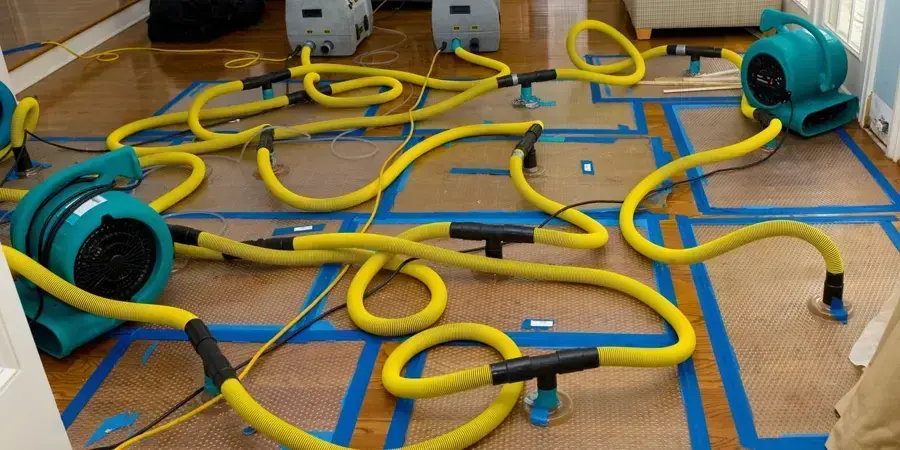
Air movers and dehumidifiers run while the team takes daily readings. Equipment comes out only when the readings reach the dry standard.
The structural drying service covers this stage, and the Malverne hub lists the other services available in the village.
Why to dry quickly
Mold can start to grow in damp materials within 24 to 48 hours. That is the main reason drying begins as soon as the water is out.
A basement that is pumped but not dried can look fine for a few days and then smell wrong. Meters, not appearances, decide when the job is finished.
Older homes make drying more important. Wood framing, plaster and masonry hold water, and a home that has seen wet weather before may already carry moisture in its walls.
The restoration team logs readings each day, so the owner can see the numbers move toward dry. When they stop moving, the equipment is checked, adjusted or removed.
Questions
Why does Malverne have a higher water table?
The village says it rests on a bed of sand and gravel left by glaciers, and that its south shore location gives it a higher water table than villages farther north.
Do all Malverne homes have basements?
That is not documented here. The post is for homes that do have lower levels, and the cleanup depends on what is actually wet.
Is a sump pump enough to prevent flooding?
A pump helps, but it depends on power and on the drain it feeds. Heavy rain and outages can overwhelm it.
Does storm water need special handling?
Yes. It carries soil and debris, so soaked porous materials are removed and surfaces are cleaned and treated.
How long does a flooded basement take to dry?
It depends on how much water came in and what the walls and floor are made of. Readings decide, not a fixed number of days.