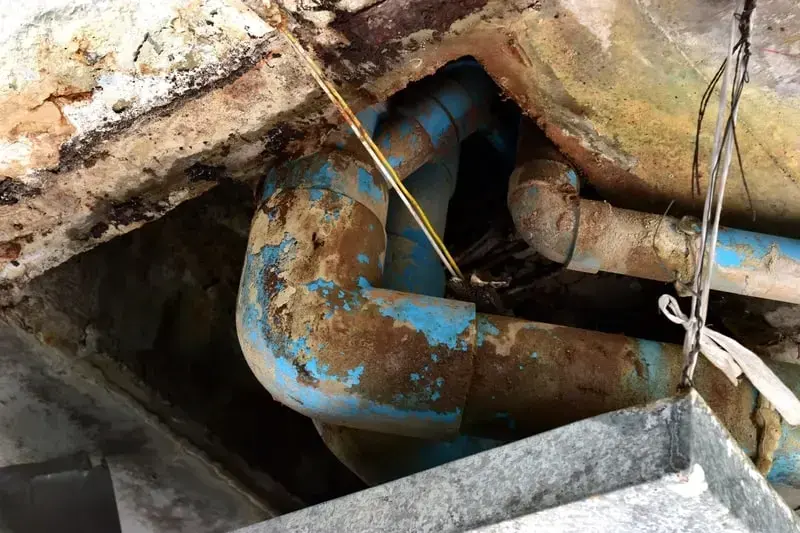
Most Mineola homes were built from the 1920s to the early 1960s. After decades of use, pipes in houses of that age are a fair suspect when water appears where it should not.
Key takeaways
- Development in Mineola began in earnest in the 1920s and was mostly complete by the early 1960s.
- Typical homes are Cape Cods, ranches and colonials on lots of about 50 by 100 feet, and many have been expanded or updated.
- The village water system serves the whole village, and its lead service information includes a category for galvanized steel service pipes.
- The first step in any burst pipe is the shutoff, then extraction before water wicks into walls.
- Tight finished spaces mean water reaches neighboring rooms quickly.
The housing behind the question
Mineola's development began in earnest in the 1920s and was mostly complete by the early 1960s. The typical home is a Cape Cod, a ranch or a colonial on a lot of about 50 by 100 feet.
Many of those houses have been expanded or updated. A Tudor style neighborhood sits off Old Country Road, and larger homes stand along a stretch of Mineola Boulevard.
Houses of this age have had time for plumbing to wear, be repaired and be added to.
Many of the houses have also been added onto over the years. A new bathroom, a finished attic or a kitchen extension means new pipe runs joined to old ones, and each joint is a place where a failure can start.
Homeowners who are not sure what is behind their walls can ask a plumber for an inspection of the supply pipes, which is a sensible step before a problem rather than after.
What the village says about its water pipes
The Village of Mineola owns and runs its own water system, which serves the entire village. Its Water Department handles production, treatment and distribution of drinking water, lead and copper testing, meter testing, annual hydrant flushing and leak detection.
The village's information on lead service pipes includes a category for customers with galvanized steel service pipes. That tells homeowners that galvanized steel exists in the village system.
It does not describe the pipes inside any one house. A plumber can identify what a given home has.
How a burst pipe plays out in a small lot home
A burst supply pipe can release a great deal of water in a short time. In a compact house, the water finds the nearest low point, and in a house with finished rooms that is often the carpet or the hardwood next door.
The signs are not always dramatic. A hissing sound in a wall, a sudden drop in water pressure or a damp patch on a ceiling can all point to a pipe that has let go.
A slow leak is just as damaging over time. It can run for weeks before anyone sees a stain, and the framing around it stays wet.
- Water travels along framing and under baseboards into neighboring rooms.
- A pipe inside a wall can soak insulation and drywall before anything shows.
- A ceiling below a bathroom is a common place for the first stain.
- Hardwood cups and carpet pad holds water long after the surface dries.
The first steps
A burst pipe is an emergency, but the first moves are simple.
The village Water and Sewer Division offers emergency service seven days a week for village water and sewer issues. That service handles the village system, not a pipe inside a house, so the plumber and the restoration team are the right calls for an indoor break.
- Shut off the main water valve to the house.
- Turn off power to affected rooms only if the panel is dry and reachable.
- Open a faucet on the lowest level to drain what is left in the pipes.
- Move furniture and rugs off wet floors.
- Photograph the damage and the burst section before repairs begin.
- Call a plumber for the repair and the restoration team for the water.
What the response looks like
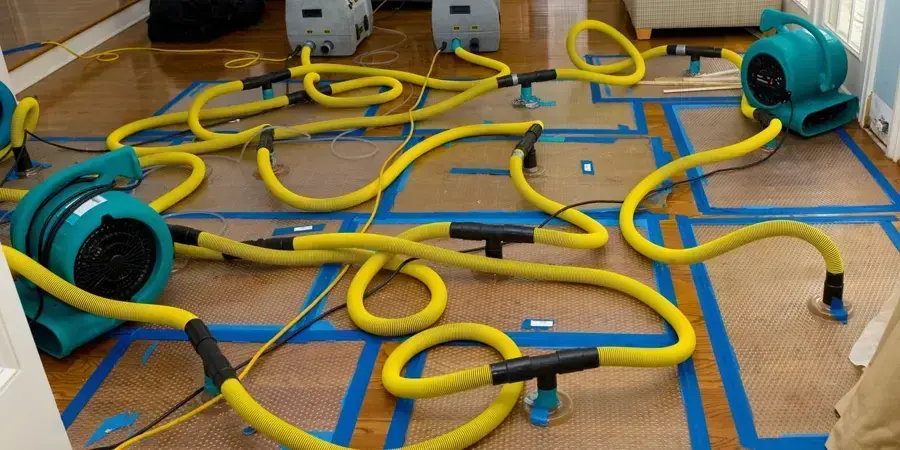
The extraction crew removes standing water and then looks for what the water reached. Moisture meters and a thermal camera show wet areas behind walls.
Where a wall cavity is wet, the drying team opens it in a targeted way and dries it with air movers and dehumidifiers.
Extraction in tight spaces
Small lots and finished spaces mean standing water is often in tight rooms with furniture and built in cabinets. Extraction works around those obstacles and protects what can be saved.
The water extraction service covers that first stage.
Drying wall cavities and floors
A burst pipe leaves water in places that cannot be seen. The burst pipe water damage service dries the cavity, the subfloor and the ceiling below until readings are normal.
The Mineola hub lists the other services the crew provides in the village.
Contents and finishes
Many Mineola homes have been updated, which means finished basements, newer flooring and built in cabinets. Those finishes are expensive to replace, so the team looks for what can be dried in place before deciding what to remove.
Winter makes pipes more likely to fail
Long Island winter freezes can split pipes, and the galvanized service pipes in the village system are a reminder that age and cold are a poor mix.
A frozen pipe cleanup follows many of the same steps, with the added work of finding where the ice sat and what thawed behind the wall.
Pipes in exterior walls, garages and unheated porches are the usual victims. A split often opens during a thaw, when the ice melts and water begins to flow again, so the damage can appear hours after the cold has passed.
Apartments, offices and shared walls
Mineola also has multi story apartment and office buildings. A pipe failure upstairs can reach a unit below, so the response covers more than one space.
Telling a neighbor or building manager early helps contain the loss.
Jericho Turnpike, Mineola Boulevard and Willis Avenue are commercial corridors, so a pipe failure can also hit a storefront or an office. Business owners need to move stock and records off the floor early.
Whatever the building, the steps are the same: stop the water, extract, find what is wet and dry it to readings.
- Tell the building manager and the neighbors below as soon as a leak is found.
- Ask for the water to be shut off to the affected unit.
- Photograph the source and the damage in every unit that is hit.
Questions
What are galvanized steel service pipes?
They are older steel pipes with a zinc coating that carry water from the street to a building. The village lists a category for customers who have them.
Does an older Mineola home always have old pipes inside?
Not necessarily. Many homes have been expanded or updated, and pipes may have been replaced. A plumber can tell what a house actually has.
What should be shut off first in a burst pipe?
The main water valve to the house. Then power to the wet area, if the panel is dry and can be reached safely.
Who handles the repair of a burst pipe?
A plumber repairs the pipe. The restoration team removes the water and dries the structure.
Does the village help with an emergency inside a home?
The village Water and Sewer Division offers emergency service seven days a week for village water and sewer issues, which is separate from damage inside the house.