Structural Drying in Rockville Centre, NY
After the water is out, the building still holds moisture in framing, floors and walls, so the crew sets air movers and dehumidifiers and checks readings until everything reaches the dry goal.
(888) 527-9860Call about structural drying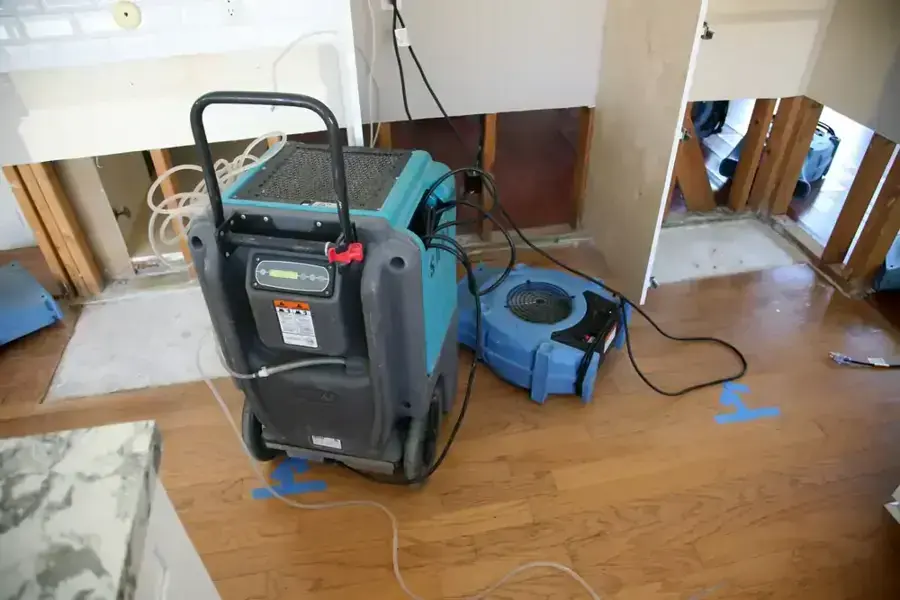
First steps for structural drying and dehumidification in Rockville Centre
Stop new water
Shut off the source so drying does not fight a leak.
Remove standing water
Mop or pump out what you can first.
Open the airflow
Open closet doors and lift hanging items so air can move.
Leave equipment alone
Do not switch units off or move them.
Drying is science, not guesswork. Water that has soaked into wood, plaster and concrete leaves slowly, and it only leaves when the air around it is warm, moving and dry.
What does structural drying and dehumidification cost in Rockville Centre, NY?
Structural drying runs from $1,500 for one room to $16,000 when plaster, hardwood or block needs Class 4 drying, depending on the materials, the area and how long equipment must run.
| Scope | Typical range | Usually includes |
|---|---|---|
| One room, Class 1 or 2 | $1,500 to $3,500 |
|
| Several rooms, Class 3 | $3,500 to $8,000 |
|
| Class 4: plaster, hardwood, block | $8,000 to $16,000 |
|
Ranges are typical, not a quote: category of water, square footage, material class and how fast drying started move the number most. Run the water damage cost calculator for a closer range.
How structural drying and dehumidification is handled in Rockville Centre
The tech who does the walkthrough maps moisture before any equipment goes down, so the drying plan matches what is actually wet. Equipment stays until the readings say dry, not until it looks dry.
- I
Map
Meters mark wet areas and set the dry goal.
- II
Place
Air movers and dehumidifiers go in by room volume.
- III
Monitor
Readings are logged and equipment is adjusted.
- IV
Finish
Equipment leaves only after every point reaches the goal.
How dry is defined
A dry goal is set from unaffected materials in the same building, and drying continues until the wet areas match it. Meters read wood, drywall and concrete, while a psychrometer tracks the temperature and humidity of the air.
- Moisture content is read at marked points every visit
- Equipment is moved or removed as readings fall
- Humidity and temperature are logged for the record
Equipment for each material
Air movers push dry air across wet surfaces. LGR dehumidifiers pull moisture from the room, and desiccant units handle dense materials such as plaster, hardwood and block, where standard units struggle. Mats and hoses draw water up through floors.
- Air movers are placed along walls and floors
- LGR units are sized to the volume of the room
- Desiccant units are used for dense materials
After the flood, the drying
After the September 2023 flood, the water drained away once the rain stopped and roads returned to normal, but interiors that took on water still had to be dried out. That gap between surface recovery and real dryness is the work of structural drying.
Closing walls over damp framing invites decay, so equipment stays until every reading reaches the goal. Water extraction comes first, and drying follows.
Class and water category decide the plan: a clean water leak in one room needs far less equipment than a flooded floor with plaster walls.
Structural drying and dehumidification across Rockville Centre and nearby villages
The drying crew covers ZIP codes 11570 and 11571, including South Hempstead and the streets near Long Beach Road and Lakeview Avenue, along with homes and businesses across the village.
The same service nearby: structural drying and dehumidification in Hempstead, Malverne, Garden City.
Water damage restoration in Rockville Centre · every town covered
Related water damage services in Rockville Centre
Structural Drying and Dehumidification questions in Rockville Centre, NY
How long does structural drying take?
Most jobs take several days, and dense materials such as plaster or hardwood can take longer. The readings, not the calendar, decide when it ends.
Why are the machines so loud and warm?
Dehumidifiers and air movers run continuously and give off heat, which helps evaporation. The noise is part of getting the building dry.
What is the difference between LGR and desiccant units?
LGR units pull moisture by condensing it and suit most rooms. Desiccant units work in cooler or very wet conditions and on dense materials.
Can the walls be closed once the water is gone?
Not until readings reach the dry goal, because wet framing under new drywall invites decay. The crew confirms with meters before anything is closed up.
What does drying cost?
Jobs run from $1,500 for one room to $16,000 for Class 4 materials. The main structural drying pricing lists the same ranges.
Does drying come after extraction?
Yes. Standing water is removed first, then air movers and dehumidifiers work on what soaked into the structure.
Dry the structure to the readings
Moisture left in framing and plaster causes decay and swelling. Tell the crew which rooms got wet and what the surfaces are made of.
(888) 527-9860Call about structural drying