Structural Drying in Williston Park, NY
Structural drying removes the moisture left in framing, plaster, hardwood and subfloors after the water is gone. Air movers and dehumidifiers run on a plan, and readings decide when they come out.
(888) 527-9860Talk to a drying crew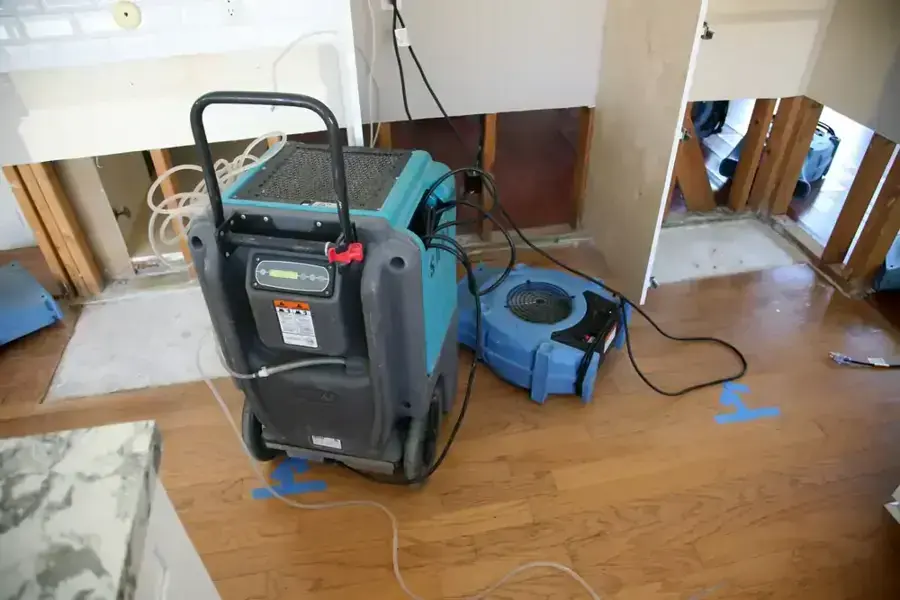
First steps for structural drying and dehumidification in Williston Park
Shut off the source
Shut off the source and extract standing water.
Keep rooms closed
Close doors and windows in the drying area.
Leave equipment running
Do not switch machines off or move them.
Expect daily checks
Technicians return to take readings and adjust the equipment.
A floor that looks dry can still be wet inside. Water that soaked into studs, plaster and subfloor keeps releasing moisture into the air, so structural drying is the step that stops swelling, odor and later damage. Skipping it is how a clean looking room turns into a musty one.
What does structural drying and dehumidification cost in Williston Park, NY?
A single room with Class 1 or 2 materials often runs $1,500 to $3,500, while a Class 4 job involving plaster, hardwood or block can reach $16,000 because it takes more equipment and longer.
| Scope | Typical range | Usually includes |
|---|---|---|
| Small room, Class 1 or 2 | $1,500 to $3,500 |
|
| Multiple rooms, Class 3 | $3,500 to $8,000 |
|
| Class 4 plaster, hardwood and block | $8,000 to $16,000 |
|
Ranges are typical, not a quote: category of water, square footage, material class and how fast drying started move the number most. Run the water damage cost calculator for a closer range.
How structural drying and dehumidification is handled in Williston Park
The tech who does the walkthrough maps moisture before any equipment goes down, so the drying plan matches what is actually wet. Equipment stays until the readings say dry, not until it looks dry.
- I
Measure
Meters, thermal imaging and psychrometric readings set the starting point.
- II
Place
Air movers, LGR units and desiccant dehumidifiers go in by class and material.
- III
Monitor
Readings are logged every visit and equipment is adjusted.
- IV
Release
Equipment comes out only when every material reaches its dry goal.
Classes of water loss
The IICRC S500 standard sorts losses into classes by how much moisture the materials can release. A Class 1 or 2 room dries with a few machines, while Class 3 and Class 4 jobs involving plaster, hardwood or block need more equipment and more time.
- Class 1 and 2: limited moisture and quicker drying
- Class 3: water from above soaking walls and ceilings
- Class 4: heavy materials like plaster and hardwood
Equipment sized to the room
Fans move dry air across wet surfaces, LGR dehumidifiers pull water vapor out of the air, and desiccant units take over when the air is cool or the materials are dense. The team sizes the equipment from room volume and material, then changes it as readings come in. Cords, ducts and hoses are laid out to keep stairs and doorways clear.
- Air movers aimed along walls and floors
- Dehumidifiers placed to keep the air dry
- Wall cavities vented where it is needed
Why older framing needs full drying
Older framing and plaster, common in Williston Park, a village planned in the 1920s, must be dried all the way through, because moisture left in walls and floors does not leave on its own. Daily readings prove it before the walls are closed. Extraction, covered under water extraction and removal, always comes first.
Structural drying and dehumidification across Williston Park and nearby villages
Structural drying covers ZIP 11596 in Williston Park, from the Hillside Avenue and Willis Avenue corridors to the Syracuse Street and Princeton Street area, the Stratford and Cornell streets area and Cross Street.
The same service nearby: structural drying and dehumidification in Hempstead, Mineola, Garden City.
Water damage restoration in Williston Park · every town covered
Related water damage services in Williston Park
Structural Drying and Dehumidification questions in Williston Park, NY
What is a Class 4 water loss?
It means heavy, dense materials like plaster, hardwood or block that hold water deep inside. They call for specialty equipment, usually desiccant units, and more time.
How do technicians know a room is dry?
They compare moisture in affected materials with readings from comparable dry ones elsewhere in the building, and equipment stays until the two match.
Why is the equipment so noisy?
Air movers and dehumidifiers move a lot of air to carry water out of the structure. The noise lasts only as long as the drying does.
Can drying run if the home is occupied?
Yes. Equipment is placed to keep living areas usable where possible, though the machines need power and rooms must stay closed to work properly.
Does drying prevent mold?
Drying quickly is the best prevention, because wet materials can support mold growth within 24 to 48 hours.
Does insurance pay for drying equipment?
Policies often cover drying after a covered loss, though terms differ. Check with your own insurer, and keep the daily logs the crew records.
Finish the dry out properly
Describe what got wet and how long ago, and the crew will explain the equipment, the readings and when drying is done.
(888) 527-9860Day and night service